

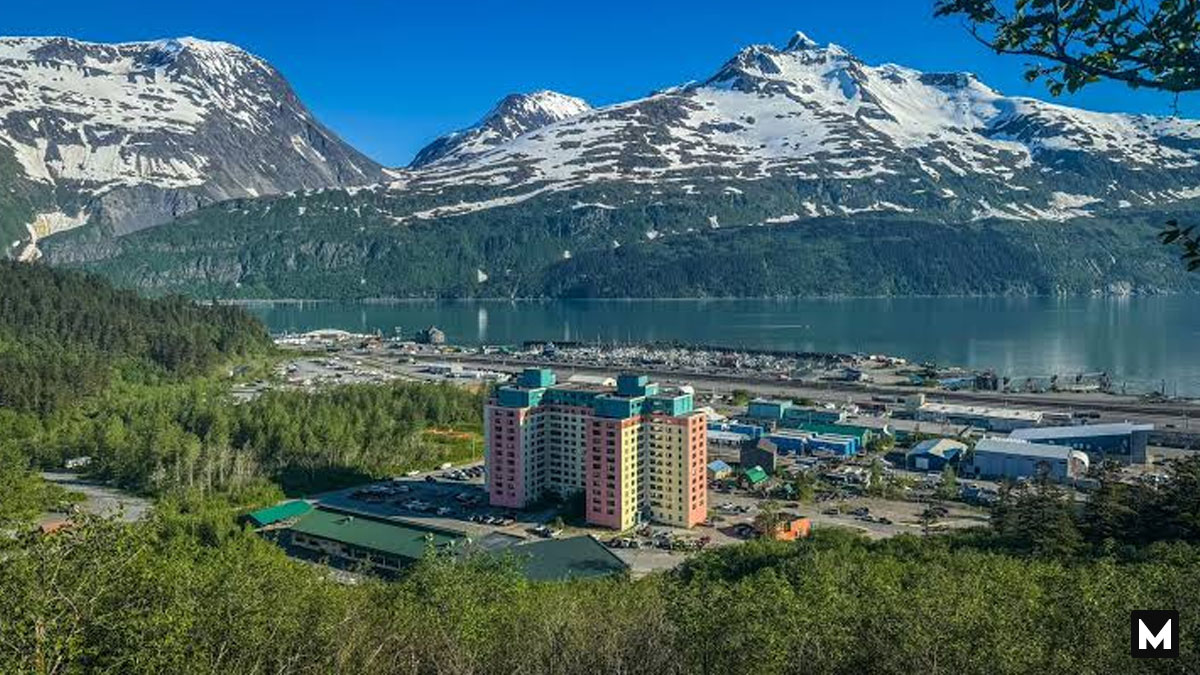
Imagine a remote community where you never have to step outside to head to your office, purchase fresh groceries, mail a letter, or drop your kids off at school. For the tiny population of this isolated Alaskan port city, this unique setup is not a futuristic simulation or a grand social experiment. It represents their everyday reality inside Whittier, Alaska, the world-famous town under one roof. This extreme vertical neighborhood totally flips traditional urban planning on its side, showing how humans can rewrite the rules of architecture to survive the harshest conditions on Earth.
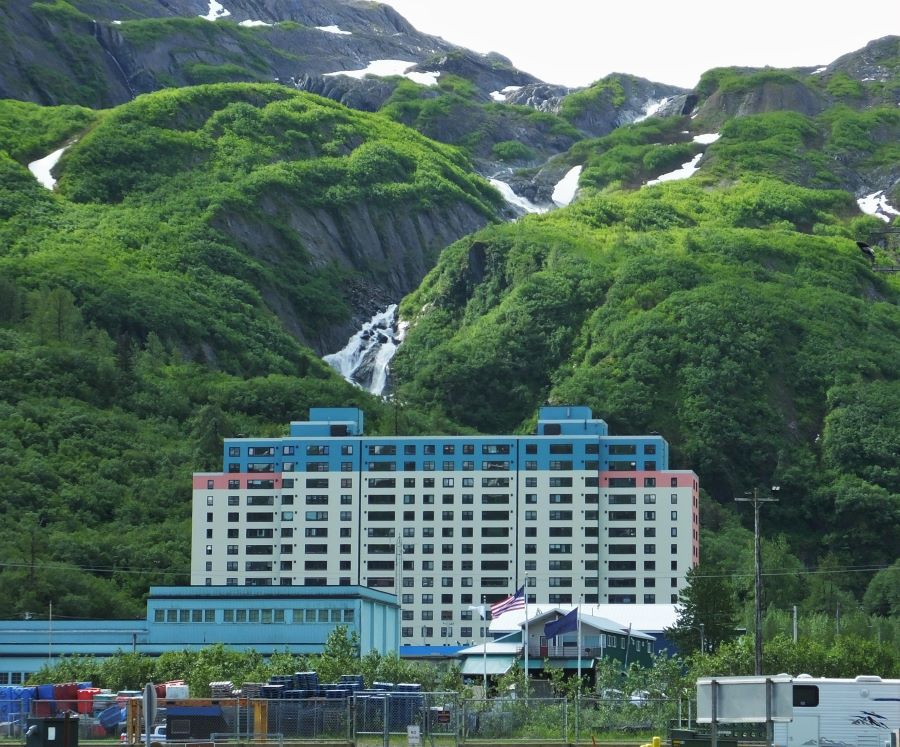
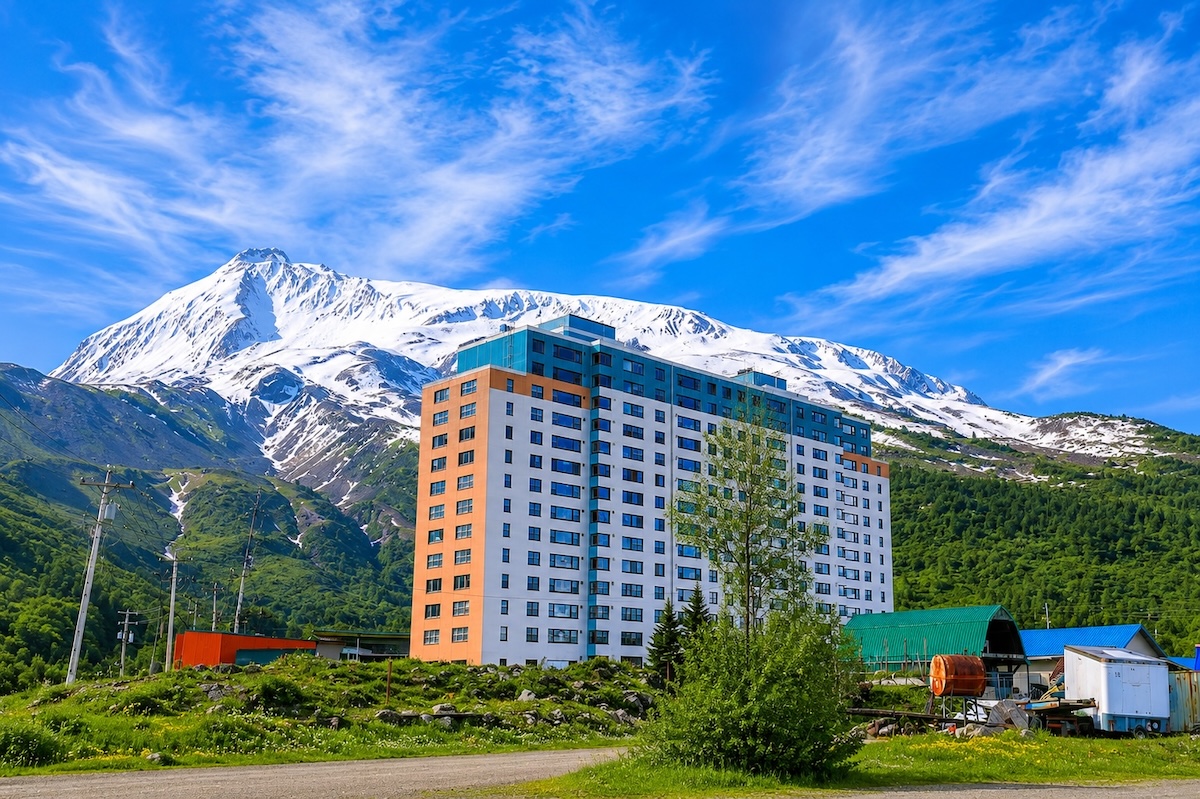
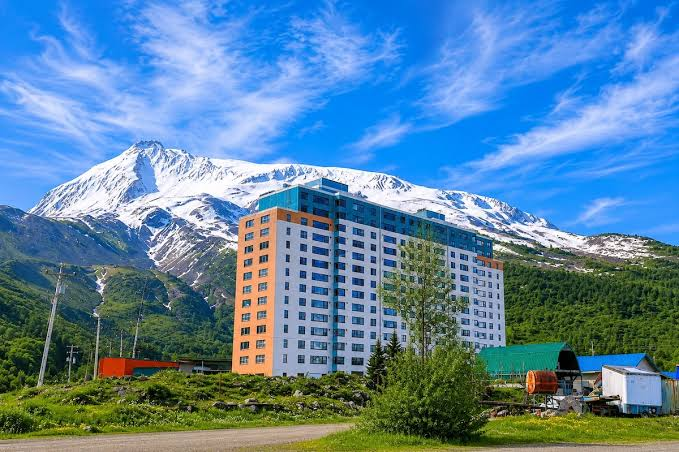
Tucked away between jagged, snow-capped peaks and the deep waters of Prince William Sound, this bizarre settlement looks incredibly quiet from a distance. A single fourteen-story concrete military relic dominates the waterfront. For the most part, a standard town spreads out across miles of roads, suburban neighborhoods, and separate shopping plazas.
Subsequently, Whittier compresses an entire municipality into the walls of a single complex known as Begich Towers. The United States military built the reinforced structure in 1953 as a strategic army barracks. Today, it houses roughly eighty-five percent of the year-round residents. Neighbors routinely pass each other in the hallways. Many ride the elevators in their pajamas to run simple errands. They complete tasks in minutes that would take a normal driver twenty minutes in a car.
Whereas a traditional city square sits outside in the open air, this vertical layout functions entirely indoors. The ground floor and basement levels contain a fully operational post office, a small grocery store, the local city hall, a health clinic, a police station, and a church. A covered underground tunnel connects the residential apartments directly to the school across the street. This design ensures that children never have to face the brutal outdoor elements during their morning trek to class.
Admittedly, this extreme vertical lifestyle might sound incredibly claustrophobic to outsiders who prefer wide-open spaces. The community was forced inward by intense geographical isolation and some of the most unforgiving weather patterns in North America. For decades, the only land route into the harbor required traveling through a single-lane, two-and-a-half-mile mountain tunnel that alternates traffic directions between cars and trains. This passage shuts down completely at night, meaning you are locked out of the city if you miss the final evening opening.
Alternatively, traveling outside during the winter months presents severe physical dangers. The area regularly faces screaming winds up to one hundred miles per hour and is buried under an average of two hundred and fifty inches of heavy snow every single year. By keeping everyone inside a single reinforced concrete building, the citizens completely bypass the hassle of freezing daily commutes and dangerous icy roads.
In short, this fascinating settlement proves that human geography will always find a way to adapt to the planet’s most extreme environments. While the concrete tower looks cold and industrial from the outside, the people living within see it as the ultimate form of community closeness.
Would you enjoy living in a town under one roof where your entire daily routine happens inside a single building? Would this vertical lifestyle feel incredibly cozy or completely claustrophobic during a dark winter storm? Let us know your thoughts in the comments section below, and share this post with your fellow geography lovers!