


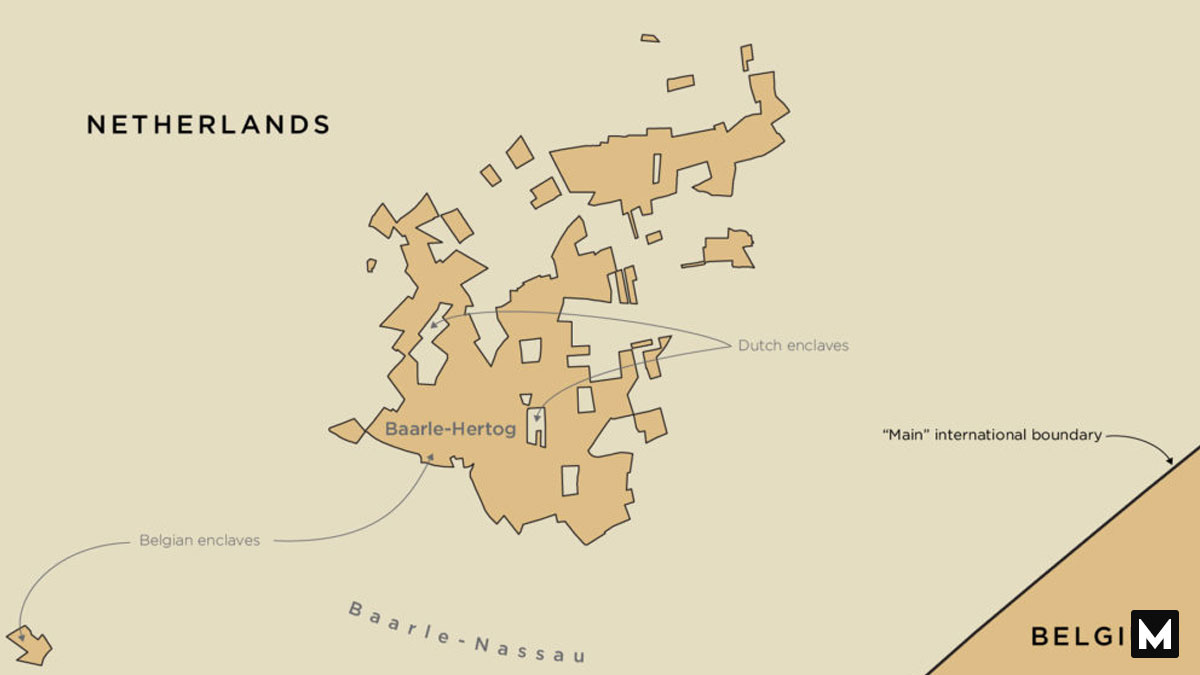
For most people, crossing an international boundary acts as a major travel event. You drive through a secure checkpoint, show your official passport to a guard, and enter a completely different country. But what if you crossed an international border just by walking from your kitchen into your living room? In the unique twin towns of Baarle-Hertog and Baarle-Nassau, this scenario represents a normal daily reality. This geographic anomaly forms a messy puzzle of international territory, where living on the border means dealing with two sets of laws, two tax systems, and two distinct nationalities inside a single neighborhood.
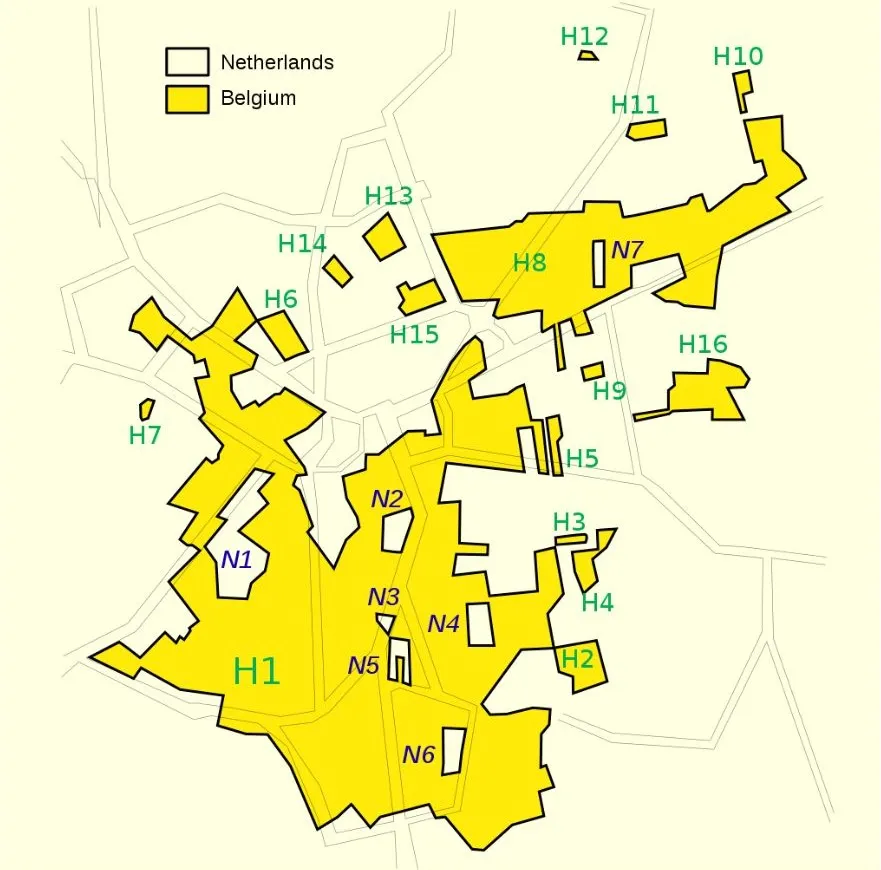
The local geography completely defies traditional mapping logic. The entire town sits geographically within the southern borders of the Netherlands. For the most part, a standard municipality functions under a single unified government.
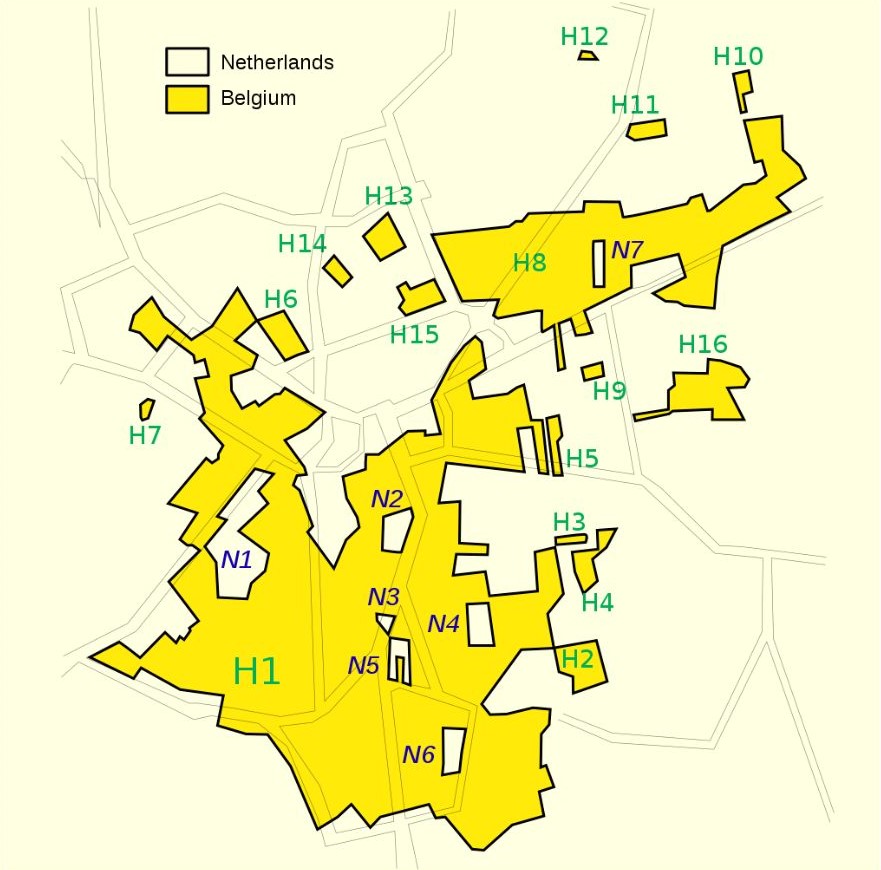
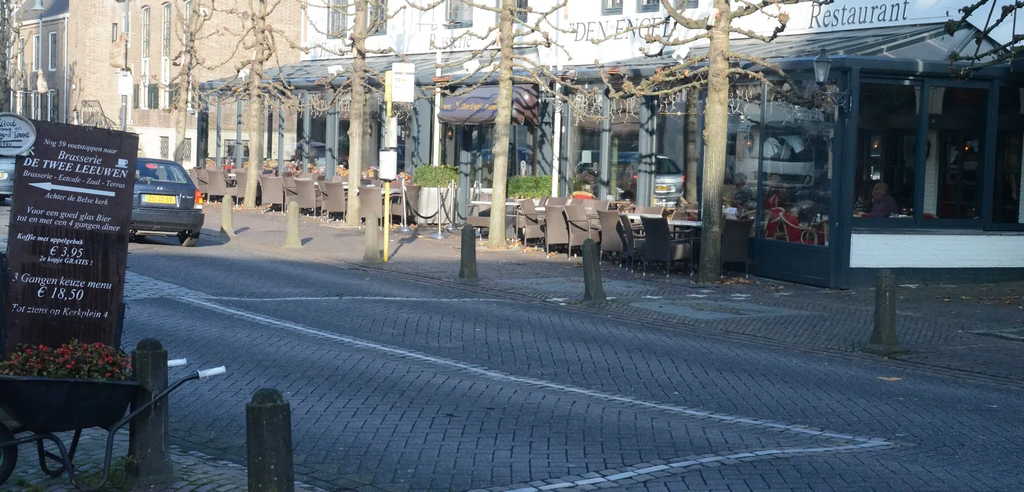
Essentially, Baarle contains twenty-two separate patches of Belgian land scattered across the area. Inside those Belgian pockets sit seven additional Dutch sub-enclaves. This layout creates a town where workers paint prominent white crosses directly onto sidewalks and streets to show residents exactly where the boundary lies. One side of the cross reads B for Belgium and the other reads NL for the Netherlands. The lines cut straight through local supermarket aisles, outdoor cafe tables, and private homes.
To solve this legal nightmare, the Dutch and Belgian governments agreed on a simple compromise known as the Front Door Rule. Whichever country your front door opens into determines your official address and your utility providers. That door also dictates the taxes you pay and the country where you vote. This rule has led to some incredibly clever architectural workarounds over the years. If property taxes spike in the Netherlands, residents have been known to rip out their front door physically. They board up the wall and reinstall the door a few feet over on the Belgian side to switch countries instantly.
As a result, this fragmented environment creates major logistical headaches for local emergency services and police forces. A Dutch police officer cannot cross the white sidewalk line to arrest someone standing on Belgian soil without intense international coordination. To keep the town safe, the two nations built completely integrated joint police forces and fire departments. By comparison, the legal absurdity peaked during recent global lockdowns when the two countries enforced entirely different safety regulations. A clothing store split by the border had to tape off half of its inventory, meaning customers could legally browse clothes on the Belgian side of the aisle while the Dutch side remained closed.
Overall, this fascinating settlement proves that human community is much stronger than political divisions. While living on the border creates an endless list of bureaucratic loops and legal trivia, the Dutch and Belgian residents live together in complete harmony. It stands as a brilliant example of a border paradox where history drew a messy grid, but human cooperation turned it into a peaceful home.
Would you feel comfortable living on the border if it meant tracking different laws and tax rules every time you stepped out your doorway? How would you design your house if an international boundary line cut straight through your favorite room? Let us know your thoughts in the comments section below, and share this post with your fellow map lovers!